
Thermomechanical Test Chamber for Thermal & Mechanical Stress Testing
A Thermomechanical Test Chamber is designed to evaluate product reliability under combined thermal cycling and mechanical stress conditions. These systems help identify structural weaknesses, fatigue failures, and material deformation through controlled environmental simulation.
As a trusted Thermomechanical Test Chamber manufacturer, Comet Environs delivers industrial systems engineered for accurate testing, repeatable performance, and long operational reliability across automotive, aerospace, defence, electronics, and industrial applications.
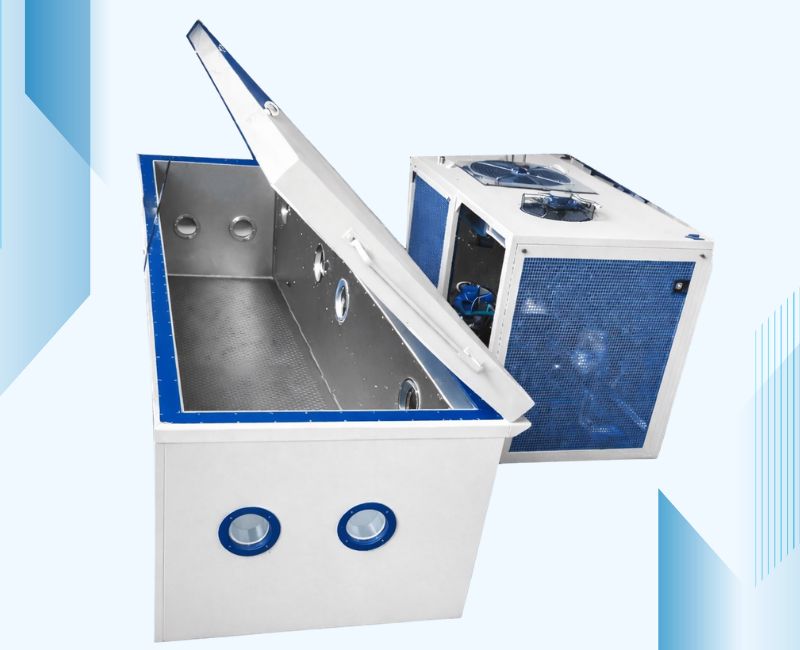
Thermomechanical Test Chamber – Process and Working Principle
A programmable Thermomechanical Test Chamber combines controlled temperature cycling with simultaneous mechanical stress simulation to replicate real-world operating conditions.
The controlled operation of a Thermomechanical Test Chamber typically includes:
High and low temperature exposure cycles
Controlled tensile and cantilever load application
Thermal expansion and contraction simulation
Dynamic fatigue and stress testing
Programmable cyclic test profiles
Real-time monitoring and data logging
Unlike standard environmental chambers, a professional Thermomechanical Test Chamber includes reinforced structural design and specialised floor ports for real-time mechanical loading during rapid thermal cycling.
This combined testing process allows a Thermomechanical Test Chamber to simulate years of operational exposure within a shorter testing duration and helps identify failure risks caused by thermal fatigue and mechanical stress.
Key Features of Thermomechanical Test Chamber
Our Thermomechanical Test Chamber systems are engineered for high-performance industrial testing applications where products are subjected to simultaneous thermal and mechanical stresses.
Key features include:
Combined thermal and mechanical stress testing
High-precision temperature control and stability
Hydraulic tensile and cantilever load simulation
Programmable thermal cycling and fatigue testing profiles
High thermal ramp rates for accelerated testing
Integrated humidity control for environmental simulation
Real-time data logging and monitoring
Custom chamber configurations for specific applications
Thermomechanical Test Chamber Benefits – Reliability & Durability Improvement
Using a properly engineered Thermomechanical Test Chamber provides measurable improvements in product validation and reliability testing programs.
Key advantages include:
Early detection of material and structural failures
Improved reliability validation
Reduced product failure risks
Better fatigue and durability analysis
Accurate environmental simulation
Compliance with industrial testing standards
Accelerated life testing capability
Faster product qualification and development
Applications of Thermomechanical Test Chamber in Industry
A heavy-duty Thermomechanical Test Chamber is widely used in industries where combined thermal and mechanical stress affects product performance.

High-Tension Insulator Testing
High-Tension Insulator Testing
• Composite silicone rubber insulator validation
• Tensile and cantilever load testing
• Hydrophobicity retention analysis
• Brittle fracture resistance testing

Electronics & Electrical Industry
Electronics & Electrical Industry
• Printed circuit boards
• Semiconductor devices
• Electronic assemblies
• Sensors and connectors

Automotive Industry
Automotive Industry
• Automotive electronics
• EV battery systems
• Mechanical assemblies
• Automotive sensors

Aerospace & Defence Industry
Aerospace & Defence Industry
• Aerospace structural components
• Avionics systems
• Defence electronics
• Qualification testing
Thermomechanical Test Chamber – Technical Specifications
Every industrial Thermomechanical Test Chamber manufactured by Comet Environs is designed based on proven environmental testing parameters.
Temperature Capability
• Standard range from –40°C to +150°C
• High-performance range from –70°C to +180°C
Mechanical Testing Capability
• Tensile load capacity from 50 kN to 250 kN
• Hydraulic loading systems up to 500 kN
Humidity Capability
• Standard humidity range from 20% to 95% RH
• Extended range from 10% to 98% RH
Temperature Performance
• Thermal ramp rate from 3°C/min up to 15°C/min
• Temperature uniformity typically within ±2°C
Chamber Construction
• Heavy reinforced structural design
• Stainless steel interior
• Industrial refrigeration and heating systems
Control System
• PLC-based programmable controller
• Data logging and alarm monitoring system
Core Testing Capabilities of Thermomechanical Test Chamber
A professional Thermomechanical Test Chamber supports advanced reliability validation under combined environmental and mechanical stress conditions.

Combined Stress Simulation
The chamber simultaneously applies thermal cycling and mechanical loading to identify structural weaknesses and interface failures that static testing cannot detect.
Elastomer Integrity Analysis
The system supports:
• Thermal expansion mismatch analysis
• Hydrophobicity retention evaluation
• Brittle fracture resistance testing
• Rubber-to-core interface validation
Accelerated Life Testing (ALT)
A Thermomechanical Test Chamber can simulate long-term field exposure within a shorter testing duration, helping reduce product development time.
Types and Variants of Thermomechanical Test Chamber

Thermal Fatigue Test Chamber
Thermal Fatigue Test Chamber
Used for repeated thermal expansion and contraction testing.
Vibration Integrated Thermomechanical Test Chamber
Vibration Integrated Thermomechanical Test Chamber
Combines vibration and environmental testing.
Mechanical Stress Test Chamber
Mechanical Stress Test Chamber
Used for cyclic mechanical loading validation.
Custom Thermomechanical Test Chamber
Custom Thermomechanical Test Chamber
Options include:
• Custom chamber sizes
• High load capacities
• Automation integration
• Advanced control systems
Failure Analysis & Standards Compliance in Thermomechanical Test Chamber
A professional Thermomechanical Test Chamber helps identify critical product failure mechanisms while supporting compliance with major environmental and reliability testing standards.
| Failure Mode Detected | Relevant Testing Standards |
|---|---|
| Thermal fatigue cracking | IEC 60068 series, MIL-STD-810 |
| Material deformation | ASTM D412, ISO 37 |
| Structural fatigue failures | MIL-STD-810, RTCA DO-160 |
| Coating delamination | IEC 60068 series |
| Thermal expansion mismatch failures | IEC 61109, IEC 62217 |
| Mechanical stress fractures | ASTM D412, MIL-STD-810 |
| Brittle fracture failures | IEC 61109, IEC 62217 |
Note: These standards ensure every Thermomechanical Test Chamber supports reliable qualification testing, durability validation, and global compliance programmes.
Thermomechanical Test Chamber Selection Parameters
Key selection factors include:
Temperature range
Mechanical loading capability
Product size and load capacity
Thermal ramp rate
Data logging capability
Compliance standards
Advanced Monitoring, Safety & Reliability Features
Modern Thermomechanical Test Chamber systems incorporate advanced monitoring, automation, and safety features to ensure reliable operation, process control, and long-term performance.
Remote telemetry and live monitoring
Secure VPN-based remote access
Predictive maintenance monitoring
Automated report generation
Digital temperature monitoring
Over-temperature protection
Mechanical safety interlocks
Hydraulic load monitoring
Emergency shutdown system
Alarm and fault indication system
Integrated software can generate audit-ready reports with temperature, humidity, and mechanical load data, while built-in safety systems ensure stable and reliable operation throughout the testing cycle.
Every Thermomechanical Test Chamber is thoroughly tested before dispatch to ensure consistent industrial testing performance.
Thermomechanical Test Chamber Manufacturer – Comet Environs
As a trusted Thermomechanical Test Chamber manufacturer, Comet Environs delivers industrial environmental testing systems engineered for reliability.
Extensive environmental chamber engineering expertise
Our engineering team develops Thermomechanical Test Chambers suitable for demanding industrial testing.
In-house Thermomechanical Test Chamber manufacturing
All Thermomechanical Test Chambers are manufactured internally ensuring quality control.
Industrial thermal and mechanical engineering expertise
Our systems use reliable refrigeration, heating, and hydraulic mechanical loading systems.
Customised Thermomechanical Test Chamber configurations
Each Thermomechanical Test Chamber is designed based on application requirements.
Reliable installation and AMC support
We provide installation, commissioning, and long-term maintenance support.
Long operational life with stable testing performance
Our Thermomechanical Test Chambers are built for continuous industrial testing.
Selecting the right Thermomechanical Test Chamber manufacturer ensures reliable testing and validation results.
Frequently Asked Questions
When should I use a Thermomechanical Test Chamber?
When products must be tested under combined thermal and mechanical stress conditions.
What mechanical load capacity does the chamber support?
Standard systems support 50 kN to 250 kN, while hydraulic systems can support up to 500 kN.
What industries use Thermomechanical Test Chambers?
Power transmission, automotive, aerospace, defence, electronics, and manufacturing industries.
What temperature range does a Thermomechanical Test Chamber support?
Typically from –40°C to +150°C, with high-performance models up to –70°C to +180°C.
Can a Thermomechanical Test Chamber be customised?
Yes, based on size, load requirements, and testing applications.
Does the chamber support remote monitoring?
Yes, Industry 4.0-enabled systems support remote telemetry and monitoring.
Contact Our Thermomechanical Test Chamber Experts
A reliable Thermomechanical Test Chamber is essential for industries focused on environmental validation and product reliability testing. A professionally engineered Thermomechanical Test Chamber ensures accurate testing, reduced failure risks, and stable validation results.
As an experienced Thermomechanical Test Chamber manufacturer, Comet Environs provides durable and precise systems for Indian industries.