
How Custom Environmental Test Chambers Are Engineered: Environmental Test Chamber Case Study
From Customer Requirement to a Fully Engineered Testing Solution
When environmental testing is used for product qualification, reliability validation, accelerated life testing, or performance evaluation, a standard off-the-shelf chamber is not always sufficient.
Different products and industries have different testing requirements. Temperature range, humidity, ramp rate, product size, test load, recovery time, refrigeration capacity, electrical requirements, instrumentation, and data acquisition can all influence the design of an environmental test chamber.
At Comet Environs, we approach these requirements as an engineering challenge rather than simply a chamber supply requirement.
With decades of experience in environmental testing and chamber manufacturing, our team designs and manufactures customized testing systems based on the actual application and test conditions specified by the customer.
The Challenge: Every Test Application Is Different
A customer approaching an environmental test chamber manufacturer may already know the required temperature range or chamber volume. However, several other parameters can significantly affect the final design.
For example, a chamber designed for a relatively small electronic component may require a completely different refrigeration and airflow arrangement from a chamber designed to accommodate a large mechanical assembly.
Similarly, a sub-zero treatment application involving a heavy test load requires careful consideration of:
Required minimum temperature
Product and fixture weight
Heat load
Pull-down time
Temperature uniformity
Refrigeration system capacity
Insulation
Door configuration
Controller and instrumentation
Safety requirements
Step 1: Understanding the Test Requirement
The first stage is to understand what the customer intends to test and under what conditions.
Typical parameters considered by our engineering team include:
Temperature Range
The required operating temperature determines the heating and cooling technology used in the chamber.
Comet Environs manufactures refrigeration-based environmental test chambers with temperature ranges from -90°C to +200°C, depending on the chamber model, application, test load, and required performance.
For applications requiring temperatures significantly below conventional refrigeration ranges, cryogenic systems can be engineered to achieve temperatures up to -196°C, depending on the application and system configuration.
Humidity Requirement
Where temperature and humidity testing is required, the chamber needs an appropriate humidification, dehumidification, sensing, and control system.
Humidity requirements can influence the chamber construction, refrigeration system, airflow arrangement, and control strategy.
Test Load
The mass, material, heat generation, and configuration of the product under test can have a major influence on chamber performance.
A chamber designed for a lightweight electronic component and a chamber designed for a large mechanical assembly may require very different refrigeration capacities even when their nominal temperature ranges are similar.
Ramp Rate
Applications involving rapid temperature transitions require the refrigeration, heating, airflow, and control systems to work together to achieve the specified rate of change.
The required ramp rate must therefore be considered along with product mass and heat load.
Workspace
The usable internal dimensions are determined by the product, fixtures, clearances, airflow requirements, and loading arrangement.
Test Profile
Temperature cycling, thermal shock, constant temperature exposure, humidity testing, sub-zero treatment, and cryogenic testing each require different chamber configurations.
The result is a technical specification that becomes the foundation for the chamber design.
Step 2: Engineering the Chamber Around the Application
Once the requirements are established, the chamber is engineered around the application.
At Comet Environs, this can involve the integration of multiple engineering disciplines, including:
Mechanical design
Refrigeration engineering
Electrical engineering
PLC and HMI control
Temperature measurement
Safety systems
Insulation and thermal design
Air circulation
Data monitoring and recording
For demanding low-temperature applications, refrigeration architecture becomes particularly important.
Our refrigeration-based environmental test chambers can be engineered for operating temperatures ranging from -90°C to +200°C, depending on the chamber configuration, test load, workspace, and required performance.
For applications requiring substantially lower temperatures, Comet Environs can also provide cryogenic systems capable of reaching temperatures up to -196°C, depending on the application and system design.
The refrigeration or cryogenic technology is therefore selected based on the required temperature, test load, product characteristics, pull-down requirements, and test profile.
Step 3: Manufacturing Under One Engineering Approach
A customized environmental test chamber is more than a fabricated enclosure with a refrigeration unit attached to it.
The mechanical structure, insulation, refrigeration system, electrical panel, control system, sensors, airflow arrangement, and safety features must operate as one integrated system.
Typical construction and control features may include:
SS 304 internal workspace
CRCA external panels
PUF thermal insulation
Composite insulation materials where required
PT100 temperature sensors
Customized electrical and safety interlocks
Industrial temperature controllers
PLC-based control systems
HMI-based operator interface
Schneider or Siemens automation platforms
Danfoss and Bitzer refrigeration components
Pressure and temperature monitoring
The exact configuration depends on the customer’s technical requirement.
For specialized applications, the equipment can also be designed with customized chamber dimensions, loading arrangements, cable ports, control systems, data logging, and other application-specific features.
Step 4: Inspection and Performance Verification
Manufacturing is followed by inspection and performance verification before the equipment is released for dispatch.
This stage is particularly important for customized chambers because the customer is not simply purchasing equipment—they are investing in a test capability.
Depending on the project, inspection may involve verification of:
Temperature range
Temperature stability
Temperature uniformity
Ramp performance
Refrigeration operation
Heating operation
Controller functionality
Safety interlocks
Electrical systems
Alarm functions
HMI operation
Mechanical construction
Customer inspection can also be conducted at the Comet Environs manufacturing facility before dispatch.
This provides an opportunity to review the completed equipment against the agreed technical specification and address any observations before shipment.
A Practical Example: High-Capacity Sub-Zero Testing
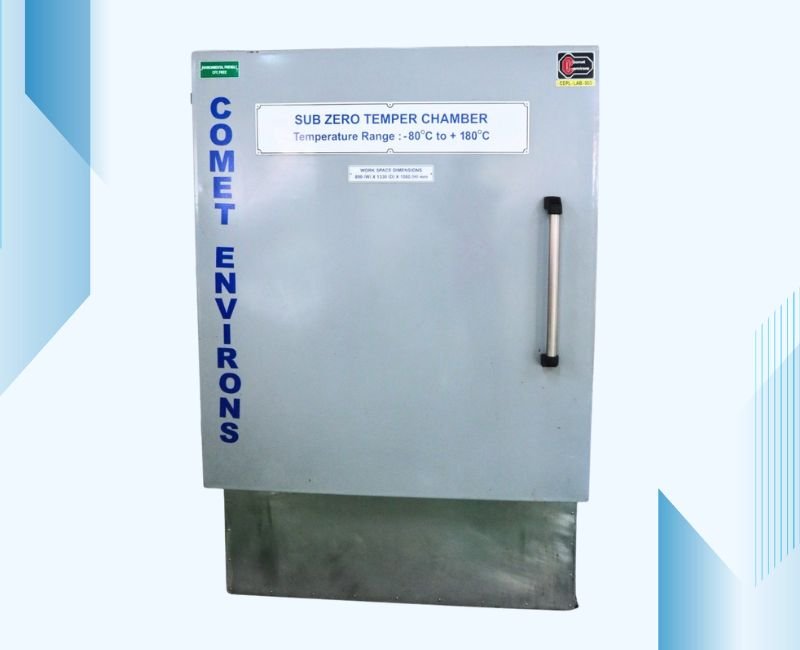
One category of equipment that demonstrates the importance of application-specific engineering is the Sub-Zero Treatment Chamber.
These chambers may be required for applications where large components or assemblies need to be exposed to controlled low temperatures.
In such applications, the engineering challenge is not simply achieving a low chamber temperature.
The system must also handle the specified product load while maintaining controlled and stable conditions.
Comet Environs manufactures customized sub-zero treatment chambers for demanding low-temperature applications.
Depending on the model and application, refrigeration-based systems can achieve temperatures down to -90°C, while maintaining controlled operating conditions for the specified test load.
For applications requiring temperatures approaching liquid-nitrogen conditions, cryogenic systems capable of reaching up to -196°C can be considered.
Such systems can incorporate multi-stage refrigeration or cryogenic cooling technology, industrial controllers, temperature sensors, PLC/HMI systems, insulated construction, and application-specific safety features.
The chamber is therefore engineered around the complete test requirement rather than around a single temperature specification.
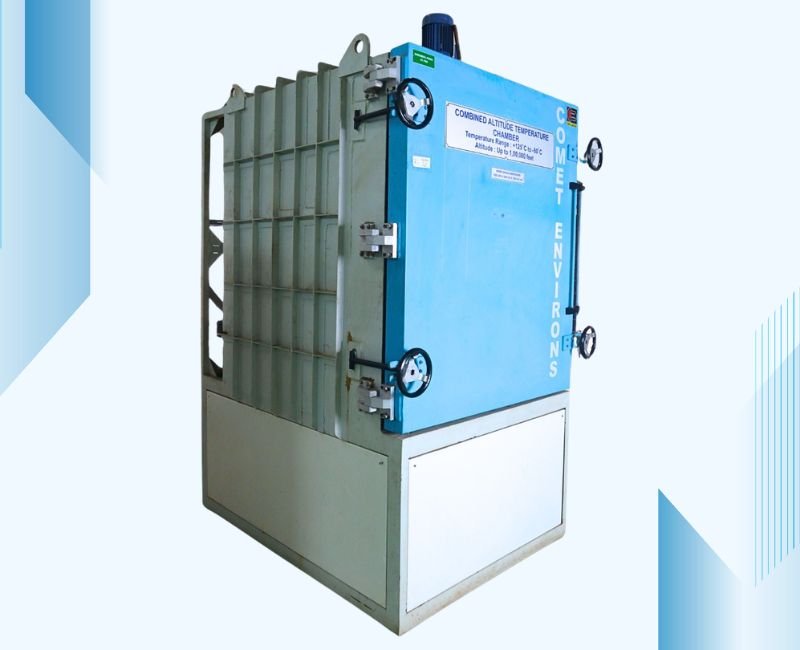
Another Application: Rapid Temperature Cycling
Temperature cycling applications present a different engineering challenge.
A chamber may be required to move repeatedly between high and low temperatures within a specified period.
In such applications, the average ramp rate, product mass, chamber volume, refrigeration capacity, heating capacity, airflow, and control algorithm all influence the final performance.
Comet Environs can engineer temperature cycling and rapid cycling systems with operating ranges extending from -90°C to +200°C, depending on the application and required test profile.
The required performance is evaluated based on the actual product load and temperature cycle rather than simply the empty-chamber specification.
For applications requiring extremely low temperatures beyond conventional refrigeration systems, cryogenic cooling can be incorporated to achieve temperatures up to -196°C, subject to the specific system configuration.
This type of application demonstrates why selecting an environmental chamber based only on chamber volume or temperature range can be insufficient.
Engineering Experience Matters
The technology used in an environmental test chamber is important, but engineering experience is equally important.
Comet Environs was established in Bengaluru in 1987 by Mr. Vivek Hegdekatte, a technocrat with a postgraduate background in Refrigeration and Heat Transfer.
His previous experience included working with organizations such as Godrej and Bharat Electronics Limited. During his tenure at BEL, he spent 12 years associated with the maintenance of a Reliability Testing Laboratory.
This experience provided a practical understanding of reliability testing, environmental testing systems, maintenance, and laboratory requirements.
The same engineering philosophy continues to influence the way Comet Environs approaches customized chamber design today.
From Manufacturer to Testing Partner
Over the years, Comet Environs has developed environmental testing solutions for organizations across sectors including automotive, electronics, aerospace, defence, industrial electronics, and other engineering applications.
The company’s manufacturing capabilities include:
Environmental Test Chambers
Temperature & Humidity Chambers
Climate Test Chambers
Rapid Cycling Thermal Chambers
Thermal Shock Chambers
Dry Heat Chambers
Sub-Zero Treatment Chambers
Deep Freezer Units
Battery Testing Chambers
Rain and Immersion Chambers
Salt Spray Chambers
Walk-in Environmental Chambers
In addition to manufacturing, Comet Environs operates an environmental testing facility in Bengaluru, providing testing capabilities for organizations requiring controlled environmental validation.
This combination of manufacturing experience and practical testing experience provides valuable insight into how environmental chambers are used in real testing environments.
What Makes a Successful Environmental Chamber Project?
A successful chamber project is not determined only by whether the equipment reaches the specified temperature.
A successful project should consider the complete lifecycle:
Requirement → Engineering → Design → Manufacturing → Inspection → Installation → Commissioning → Service
Clear communication at each stage reduces the possibility of mismatched expectations and helps ensure that the final equipment supports the intended testing application.
For customers, it is therefore important to provide as much information as possible during the enquiry stage.
Information Customers Should Provide
When requesting an environmental test chamber, customers should ideally specify:
1. Required temperature range
2. Humidity range, if applicable
3. Internal workspace dimensions
4. Maximum product weight
5. Product dimensions
6. Heat load generated by the product
7. Required temperature ramp rate
8. Test cycle/profile
9. Power supply available at site
10. Door configuration
11. Cable port requirements
12. Data logging requirements
13. Applicable testing standards
14. Required safety features
15. Installation location and access restrictions
Providing these details allows the manufacturer to develop a more appropriate technical solution.
The Comet Environs Approach
Understand the Test First. Engineer the Chamber Second.
Whether the requirement is a compact laboratory chamber, a rapid temperature cycling system, a high-capacity sub-zero treatment chamber, a thermal shock chamber, a large walk-in environmental chamber, or a cryogenic testing system, the design needs to reflect the actual application.
For conventional refrigeration-based environmental testing, Comet Environs can engineer systems covering temperatures from -90°C to +200°C.
For specialized cryogenic applications, systems can be designed to achieve temperatures up to -196°C, depending on the required application and cooling configuration.
With manufacturing experience dating back to 1987, Comet Environs continues to develop environmental testing solutions for organizations that require controlled and repeatable environmental conditions.
From initial technical discussions to design, manufacturing, inspection, installation, commissioning, and after-sales service, the objective remains the same:
To provide dependable environmental testing equipment engineered for the customer’s application.
Looking for a Customized Environmental Test Chamber?
If your application requires a specific temperature range, test load, ramp rate, chamber size, humidity condition, or customized control system, a standard catalogue specification may not be enough.
Discuss your test requirement with an experienced environmental chamber manufacturer before finalizing the equipment specification.
Comet Environs designs and manufactures customized environmental test chambers and related environmental testing systems in Bengaluru, India.
Whether you require a -90°C to +200°C refrigeration-based environmental test chamber or a specialized cryogenic system capable of reaching up to -196°C, our engineering team can evaluate the application and develop a suitable technical configuration.
Contact Comet Environs with your test parameters and application details to discuss a suitable chamber configuration.