
Rapid Temperature Cycling Chamber for Product Reliability Testing
A Rapid Temperature Cycling Chamber is designed to evaluate product reliability by exposing test specimens to repeated and controlled temperature changes. This testing method helps identify weaknesses caused by thermal expansion, contraction and repeated temperature stress.
Comet Environs manufactures Rapid Temperature Cycling Chambers for industrial testing and product validation. The system supports temperature cycling between -40°C and +70°C.
We can support the following cooling ramp rates:
– Mechanical refrigeration: Cooling ramp rates ranging from 1°C/min to 25°C/min.
– Cryogenic cooling (LN₂): Higher cooling ramp rates, ranging from 25°C/min to 50°C/min.
Suitable for applications ranging from JEDEC and IEC-based testing requirements to screening programmes, the chamber helps manufacturers assess product performance under changing temperature conditions.
It also features a built-in web application that allows operators to run the chamber from a PC or tablet and check its operating status remotely through a web browser.
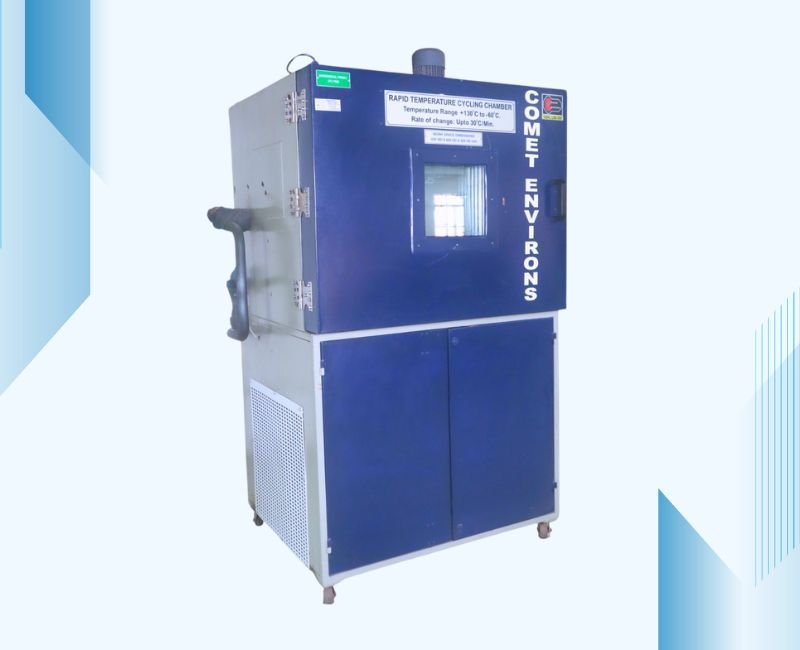
Rapid Temperature Cycling Chamber – Process and Working Principle
Rapid temperature change testing is a form of thermal cycling developed to improve the repeatability of failure detection compared with conventional thermal shock testing.
The chamber changes the temperature around the test specimen at a controlled rate. Repeated exposure to high and low temperatures creates thermal stress, helping identify potential weaknesses in materials, components and assemblies.
A typical test programme involves:
Setting the required upper and lower temperature limits
Placing the test specimen inside the workspace
Programming the temperature ramp and dwell periods
Cycling between the specified temperature limits
Monitoring and recording chamber conditions throughout the test
Benefits of a Rapid Temperature Cycling Chamber
A Rapid Temperature Cycling Chamber helps manufacturers assess product durability under repeated temperature changes.
Key benefits include:
Early failure identification
Helps reveal weaknesses in components, materials and assemblies.
Repeatable testing
Provides controlled temperature cycling for consistent test conditions.
Product reliability assessment
Supports evaluation before product release.
Flexible test programming
Allows users to set temperature limits and test cycles according to requirements.
Remote operation
Enables chamber operation and status checks through a web browser on a PC or tablet.
Support for screening programmes
Helps identify potential product defects during reliability screening.
Applications of Rapid Temperature Cycling Chamber in Industry
Rapid temperature cycling is useful for products that experience repeated temperature variations during operation, storage or transportation.

Semiconductor Industry
Semiconductor Industry
Supports temperature cycling and reliability screening of semiconductor devices and electronic packages.

Electronics and Electrical Industry
Electronics and Electrical Industry
Used to assess printed circuit boards, electronic assemblies, connectors, sensors and other components that may be affected by repeated temperature changes.

Automotive Industry
Automotive Industry
Helps evaluate automotive electronic components, control units, sensors and electrical assemblies exposed to changing operating temperatures.

Aerospace and Defence
Aerospace and Defence
Supports reliability assessment of electronic and precision components used in demanding environmental conditions.

Industrial Manufacturing
Industrial Manufacturing
Used to evaluate materials, electrical components and mechanical assemblies where repeated temperature exposure may affect performance.
Rapid Temperature Cycling Chamber – Technical Specifications
Comet Environs manufactures the Rapid Temperature Cycling Chamber with controlled temperature performance and a web-based operating interface.
Temperature Performance
Temperature range: -40°C to +70°C
Average air temperature heat-up ramp rate: 23°C/min
Temperature cycling in both directions: +70°C to -40°C and -40°C to +70°C
Workspace
• Internal workspace: 650 mm (W) × 750 mm (D) × 750 mm (H)
Control and Monitoring
• Built-in web application
• Chamber operation through a PC or tablet
• Remote chamber status checks through a web browser
The actual specimen temperature response may depend on the test load, specimen characteristics and programmed test profile. Confirm the required performance for your application before finalising the chamber configuration.
Cooling Ramp Rate vs. Cooling Technology
The cooling technology used in a temperature cycling chamber depends on the required cooling ramp rate. Different cooling methods support different rates of temperature reduction:
We can support the following ramp rates:
Mechanical refrigeration: Used for cooling ramp rates ranging from 1°C/min to 25°C/min.
Cryogenic cooling (LN₂): Used for higher cooling ramp rates, ranging from 25°C/min to 50°C/min.
The choice of cooling technology depends on the required test profile and temperature change rate.
Types and Configurations of Rapid Temperature Cycling Chamber
The chamber configuration should match the product dimensions, test load, temperature profile and required cycling performance.
Comet Environs can discuss the required configuration based on your application. Important considerations include:
Workspace dimensions and specimen arrangement
Product weight and thermal mass
Required temperature limits
Specimen ramp rate
Test cycle and dwell requirements
Monitoring and data recording needs
Contact our team to discuss a configuration suited to your testing requirements.
Failure Modes Evaluated Through Rapid Temperature Cycling
Repeated temperature changes can place stress on materials, joints and component interfaces. A suitable test programme can help identify issues such as:
Solder joint fatigue
Cracking caused by thermal expansion and contraction
Changes in component performance after repeated cycling
Delamination in electronic assemblies
Failure at material interfaces
Connector and contact degradation
Seal and bonding weaknesses
The failure modes that can be detected depend on the specimen, test profile and inspection method.
Testing Standards and Rapid Temperature Cycling
Rapid temperature cycling can support product qualification and reliability screening programmes developed around relevant JEDEC and IEC test requirements.
The applicable test method depends on the product category, required temperature limits, ramp rates, dwell periods and number of cycles.
Before testing, confirm that the chamber’s performance and the proposed test profile meet the requirements of the specific standard or customer test procedure. The chamber should not be assumed to meet every JEDEC or IEC requirement without reviewing the relevant test conditions.
Rapid Temperature Cycling Chamber vs Thermal Shock Chamber
Both systems expose products to temperature changes, but they use different approaches to create thermal stress.
| Rapid Temperature Cycling Chamber | Thermal Shock Chamber |
|---|---|
| Changes temperature at a controlled ramp rate | Exposes specimens to rapid transitions between hot and cold zones |
| Specimens remain within the cycling workspace | Many designs transfer specimens between separate temperature zones |
| Suitable for programmed temperature cycling | Suitable for sudden temperature transition testing |
| Test performance is assessed using specimen ramp rate and air temperature response | Test performance is assessed using zone temperatures and transfer conditions |
The right system depends on the required test method. Choose a Rapid Temperature Cycling Chamber when the test calls for controlled temperature ramps and repeated cycling. Choose a Thermal Shock Chamber when the test specifically requires rapid transfer between hot and cold environments.
How to Select the Right Rapid Temperature Cycling Chamber
Selecting the correct chamber helps ensure that the equipment can achieve the required test conditions.
Temperature Range
Check that the chamber covers the upper and lower temperature limits specified in your test programme.
Specimen Ramp Rate
Confirm the required specimen temperature change rate. Do not rely only on the chamber air temperature ramp rate, as the specimen response can vary with its size, material and thermal mass.
Workspace Dimensions
Check the internal workspace against the size and arrangement of the products to be tested.
Test Load
Consider the weight, material and number of specimens. These factors can affect temperature response.
Remote Monitoring
Consider whether browser-based operation and remote status monitoring are useful for your testing process.
Discuss these requirements with the manufacturer before selecting the chamber.
Safety and Reliable Operation
Safe operation depends on correct installation, suitable test loading and adherence to the operating instructions.
Before starting a test:
• Confirm that the specimen is suitable for the selected temperature range.
• Ensure that the test load does not obstruct airflow.
• Check that the specimen is positioned securely.
• Use the approved test programme and operating procedure.
• Monitor chamber conditions during operation.
• Follow the manufacturer’s maintenance and safety instructions.
The final safety provisions and protection features should be confirmed against the supplied chamber configuration.
Rapid Temperature Cycling Chamber Manufacturer – Comet Environs
Comet Environs manufactures environmental testing equipment for industrial product validation and reliability assessment.
Application-Based Engineering
We consider your product, test load and required temperature profile when discussing chamber requirements.
Flexible Cooling Technology
We offer mechanical refrigeration for cooling ramp rates from 1°C/min to 25°C/min and cryogenic cooling (LN₂) for rates from 25°C/min to 50°C/min.
Practical Workspace
The specified internal workspace of 650 × 750 × 750 mm supports suitable test specimens and assemblies.
Web-Based Operation
The built-in web application allows operation through a PC or tablet and remote status checks using a web browser.
Technical Support
Our team can discuss chamber selection, installation requirements and maintenance support based on your application.
Frequently Asked Questions
What is a Rapid Temperature Cycling Chamber?
It is an environmental test chamber that changes temperature at a controlled rate to assess product performance under repeated thermal stress.
What is the temperature range of this chamber?
The specified temperature range is -40°C to +70°C, covering both heating and cooling directions.
What is the ramp rate of the Rapid Temperature Cycling Chamber?
The cooling ramp rates depend on the selected cooling technology:
Mechanical refrigeration: 1°C/min to 25°C/min.
Cryogenic cooling (LN₂): 25°C/min to 50°C/min.
What is the internal workspace?
The specified workspace is 650 mm wide × 750 mm deep × 750 mm high.
Can I operate the chamber remotely?
Yes. The built-in web application allows you to operate the chamber from a PC or tablet and check its status remotely through a web browser.
Which industries use Rapid Temperature Cycling Chambers?
Electronics, semiconductors, automotive, aerospace, defence and industrial manufacturing sectors use temperature cycling for product reliability assessment.
Can the chamber support JEDEC and IEC testing requirements?
The chamber is intended for applications ranging from JEDEC and IEC-based requirements to screening. Confirm the specific test method and its temperature, ramp rate and dwell requirements before use.
What is the difference between rapid temperature cycling and thermal shock testing?
Rapid temperature cycling changes the specimen temperature at a controlled ramp rate. Thermal shock testing typically exposes specimens to sudden temperature transitions, often by transferring them between hot and cold zones.
Contact Our Rapid Temperature Cycling Chamber Experts
Choosing the right Rapid Temperature Cycling Chamber is important for reliable product validation. Comet Environs manufactures chambers designed for controlled temperature cycling between -40°C and +70°C, with cooling technology options to support different ramp rate requirements.
Share your product dimensions, test load and required temperature profile with our team. We can help you assess the chamber’s suitability for your application.